
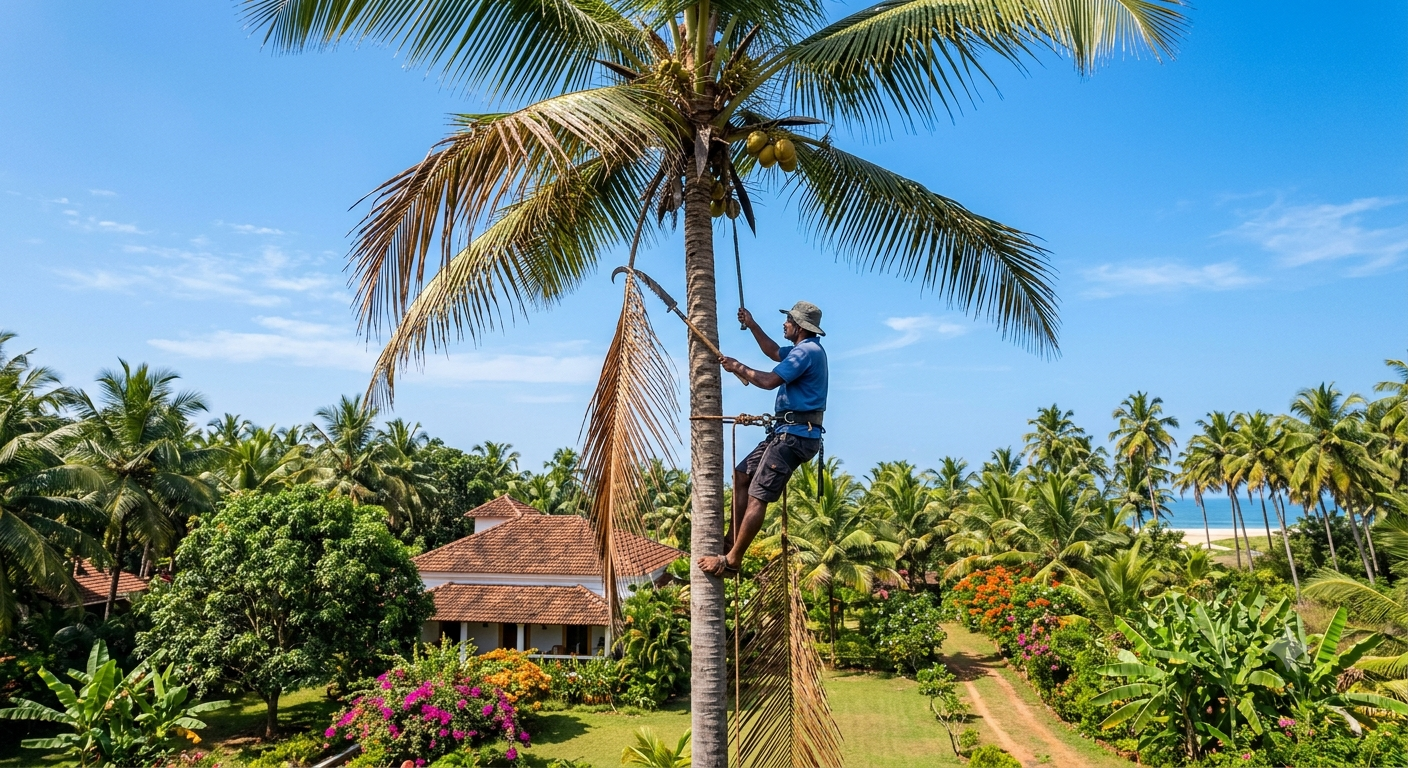
If your property has coconut palms — and most do — they need more attention than people assume. Coconut trees look self-sufficient, but neglected fronds and nuts are a genuine safety hazard, and poor maintenance shortens a tree's productive life.
Why dead frond removal isn't optional
A mature coconut tree drops fronds and nuts on its own schedule, and both are heavy enough to damage roofs, cars, and people below. Removing dead and dying fronds before they drop naturally — rather than waiting for wind to do it — is the single most important safety task on a property with palms. It also improves the tree's appearance and airflow, which reduces pest and fungal issues at the crown.
How often pruning is actually needed
Most coconut palms need dead frond and nut removal every four to six months, more often on older or taller trees that produce heavily. Trees near driveways, parking, walkways, or roofs should be on the shorter end of that schedule regardless of how they look from the ground — you often can't judge frond condition accurately from below.
What proper pruning involves
This isn't a job for a ladder and a machete. Safe coconut tree maintenance means removing only dead or clearly dying fronds (over-pruning green fronds stresses the tree and reduces yield), checking for early signs of pest damage like rhinoceros beetle boring at the crown, and clearing accumulated debris from the crown where water and organic matter collect and invite rot.
Signs a tree needs attention sooner
Yellowing fronds that haven't fully died, a leaning trunk, visible boring holes near the crown, or unusually sparse nut production are all reasons to get a tree assessed outside its normal schedule rather than waiting for the next round.
Folding this into regular garden care
Coconut and other palm maintenance is easiest to stay on top of when it's part of a standing garden and lawn maintenance schedule rather than a separate, easy-to-forget task. We handle palm assessment and pruning as part of routine visits for properties across North Goa and South Goa, so trees get checked on a predictable cycle instead of only after something drops.