
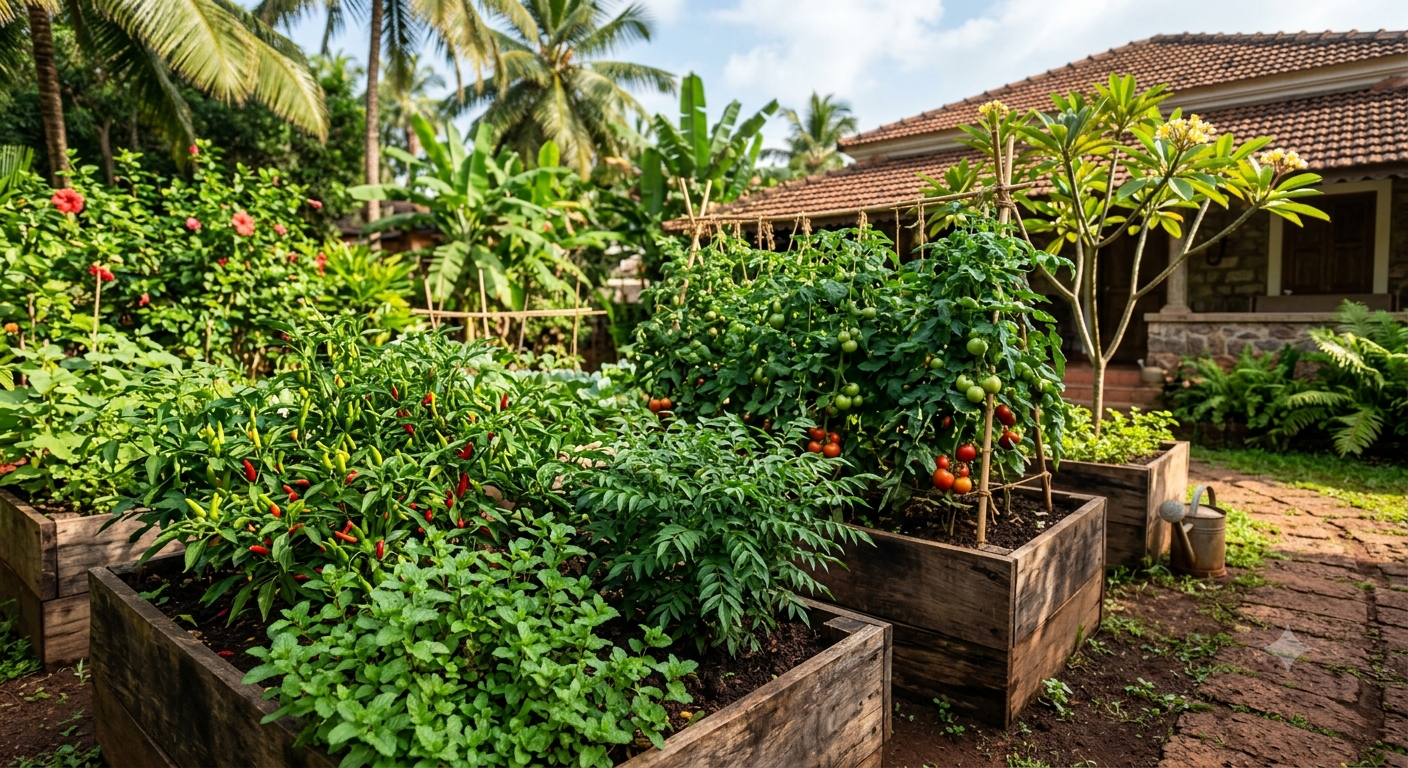
Kitchen gardens have become one of our more frequently requested additions to residential landscape design, and Goa's climate is genuinely well-suited to a productive one, provided it's planned around the seasons rather than treated as a year-round, plant-anything setup.
What actually grows well here
Chillies, tomatoes, brinjal (eggplant), and okra all do well through the dry season with consistent watering. Leafy greens — spinach varieties, amaranth, methi — grow fast and are worth succession planting every few weeks rather than all at once. Herbs like curry leaf, lemongrass, mint, and basil are close to maintenance-free once established and genuinely useful in a Goan kitchen. Monsoon growing is trickier; a raised bed with good drainage extends what's viable through the rains considerably.
Siting the kitchen garden
Most edible plants need a minimum of six hours of direct sun, which rules out shaded corners regardless of how convenient they'd be near the kitchen door. Proximity still matters for practicality — a kitchen garden that requires a genuine walk tends to get used less than one that's a few steps from where the cooking happens, so we try to find the sunniest spot within easy reach rather than defaulting to wherever's easiest to dig.
Raised beds versus in-ground planting
Given how fast Goan soil drains and how much amendment it typically needs (see our soil guide), raised beds are often the more practical choice for a kitchen garden — they let you control soil quality precisely without amending an entire in-ground plot, and they drain better during heavy monsoon spells.
Watering a kitchen garden properly
Vegetables are less forgiving of inconsistent watering than ornamental planting — irregular watering shows up quickly as blossom drop, splitting fruit, or bolting greens. A simple zoned drip system dedicated to the kitchen garden, separate from the rest of the property's irrigation, makes it much easier to get this right consistently.
Pest management without heavy spraying
Kitchen gardens need a lighter touch on pest control than ornamental beds, given produce is being eaten. Companion planting (marigold and basil are both useful, low-effort options), handpicking visible pests early, and good airflow between plants go a long way before chemical intervention is needed.
If you want a kitchen garden built into a broader landscape design rather than bolted on separately, get in touch — siting and irrigation both work better when planned as part of the whole property from the start.