
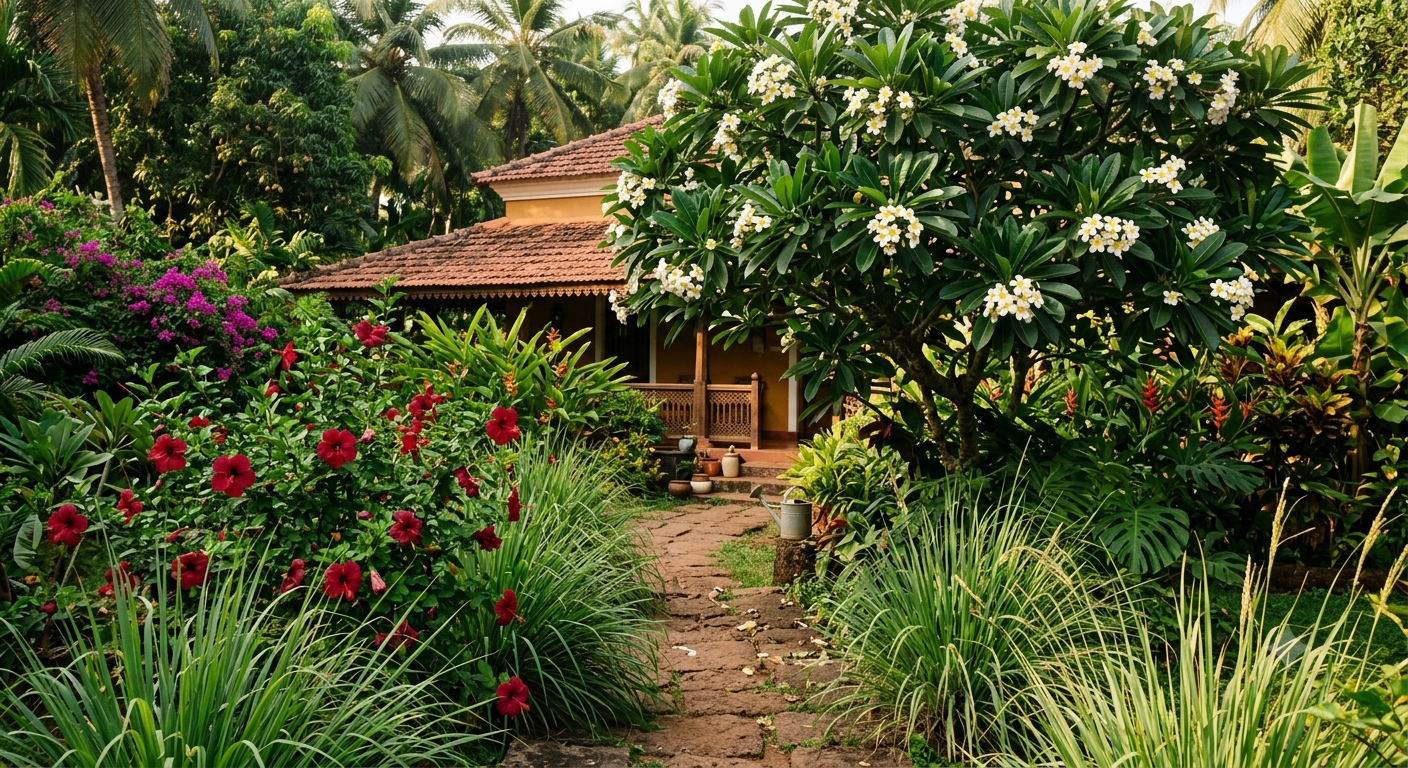
Imported ornamentals get requested constantly, and a lot of them do fine here — but native and long-naturalised plants consistently outperform them on the metric that matters most after installation: how much attention they need to keep thriving.
Why native planting is worth defaulting to
A plant that's adapted to Goa's rainfall pattern, humidity, and soil doesn't need the season-by-season intervention an imported ornamental often does. That translates directly into lower maintenance cost and fewer plant losses over time — the practical argument for native planting, separate from any ecological one.
Structural and canopy plants
Frangipani (plumeria) is close to maintenance-free once established and flowers reliably in poor soil. Flame of the forest and gulmohar give strong seasonal colour as canopy trees on larger plots. Areca and coconut palms are obvious but worth stating plainly — they're everywhere here because they simply work.
Flowering and ornamental ground-level planting
Hibiscus in its many local varieties is a dependable, near-constant bloomer. Ixora is a workhorse hedging and border plant that tolerates both sun and light shade. Crossandra and periwinkle handle Goa's heat and humidity with minimal fuss and are useful low-maintenance ground-level colour where higher-upkeep bedding plants would need constant replacement.
Groundcover and erosion control
Vetiver grass deserves more use than it gets — genuinely excellent for erosion control on sloped plots, and it holds up through the monsoon better than most decorative groundcovers. For general groundcover in beds, wandering jew (tradescantia) and various local creepers fill in reliably without the maintenance a manicured groundcover often demands.
Mixing native with ornamental, sensibly
None of this means avoiding ornamentals entirely — a garden built only from native species can look plain if that's not the intent. The practical approach is using native and naturalised plants as the reliable structural backbone, then layering in more demanding ornamentals selectively, in spots where they'll get the attention they need.
If you want a planting plan that leans on what actually thrives here rather than a generic reference-photo list, our landscape design process starts with a site assessment specifically to identify what your plot's soil, sun, and exposure can realistically support.