
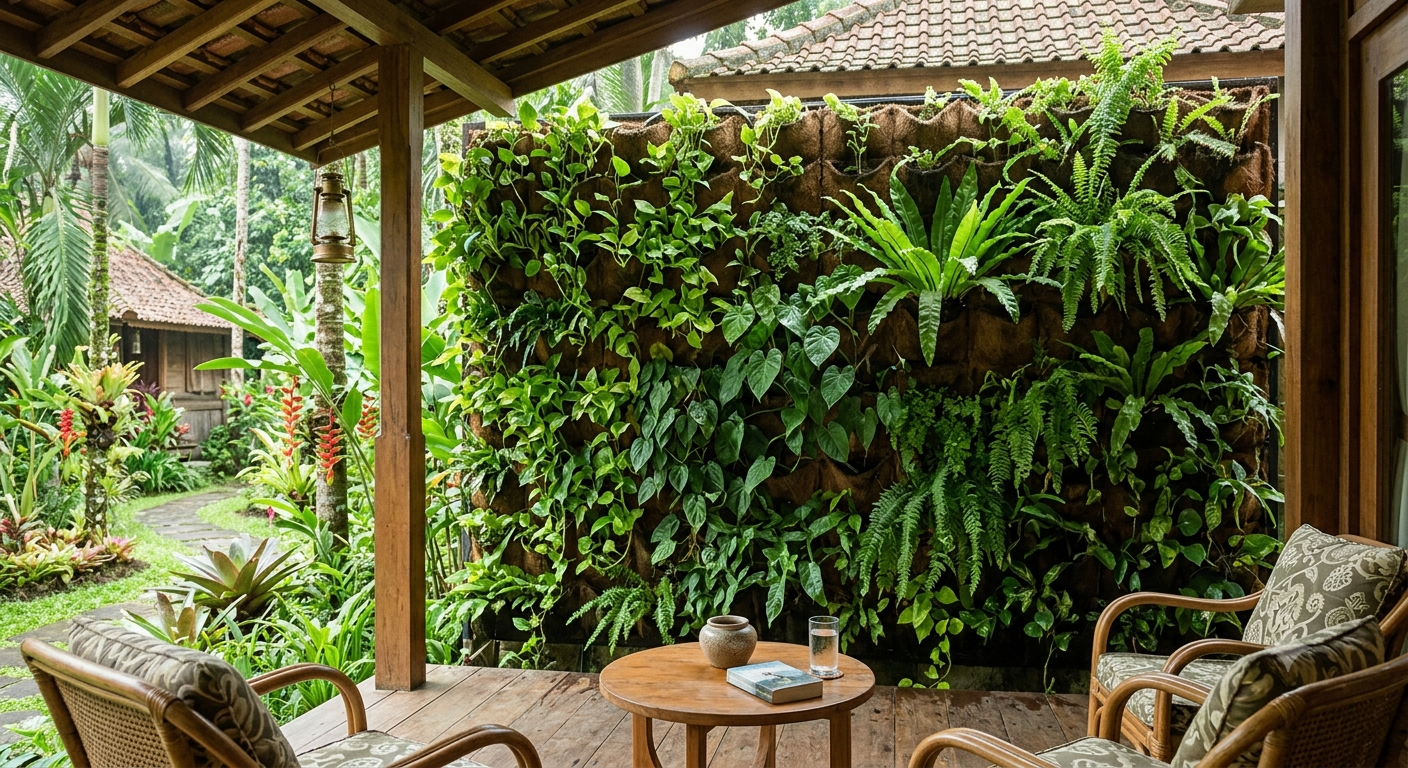
Vertical gardens photograph beautifully and get requested a lot, usually after a client has seen one somewhere else. The honest answer on whether they work here is: yes, but only with the right system and plant selection — a lot of vertical gardens installed in Goa fail within a year because both were wrong from the start.
What actually goes wrong
Two failure modes account for most of what we get called to fix. The first is a felt-pocket or fabric-based system that never fully dries out in Goa's humidity, leading to root rot and mould behind the wall. The second is plant selection borrowed from drier-climate reference photos — ferns and mosses that need constant misting look great in a portfolio shot and struggle here without near-constant intervention.
What holds up
Modular planter-based systems with individual drainage per cell outperform felt-pocket systems in our experience, because each plant's root zone can actually dry between waterings instead of sitting in permanently damp fabric. For planting, we favour tougher, humidity-tolerant species — philodendrons, pothos, certain bromeliads, and select ferns chosen for resilience rather than looks alone — over the delicate varieties that dominate vertical garden reference images.
Irrigation is the make-or-break detail
A vertical garden lives or dies on its watering system. Manual watering is unreliable at height and across a large wall area; a properly zoned drip system with a timer is close to mandatory for anything beyond a small feature wall. This is worth planning as part of the same irrigation scope as the rest of the property, not bolted on afterward.
Where they make the most sense
Vertical gardens do best on sheltered walls — under an overhang, on a covered patio, or facing away from direct monsoon rain — rather than fully exposed exterior walls that take the brunt of wind-driven rain for months at a time. Interior courtyard walls tend to be the most successful placement we see.
Maintenance is not optional
A vertical garden needs more frequent attention than a bed at ground level — dead plant replacement, drainage checks, and pruning to keep growth even across the wall. If you're considering one, factor ongoing garden maintenance into the decision, or talk to us about whether your specific wall and orientation is actually a good candidate before committing to the install.